Frozen Pipe Cleanup in Blaine, MN
The high on Tuesday was minus eleven. The kitchen faucet on the north wall ran slow that night and then quit, and you figured it would come back with the weather. It did. When the thaw arrived Friday the line behind the sink cabinet had split, and water ran down inside the wall into the basement bathroom below for most of a workday. This site puts you through by phone to an independent local provider who cleans up after frozen pipes in Blaine and across Anoka County.
Working out how long the wall has been wet
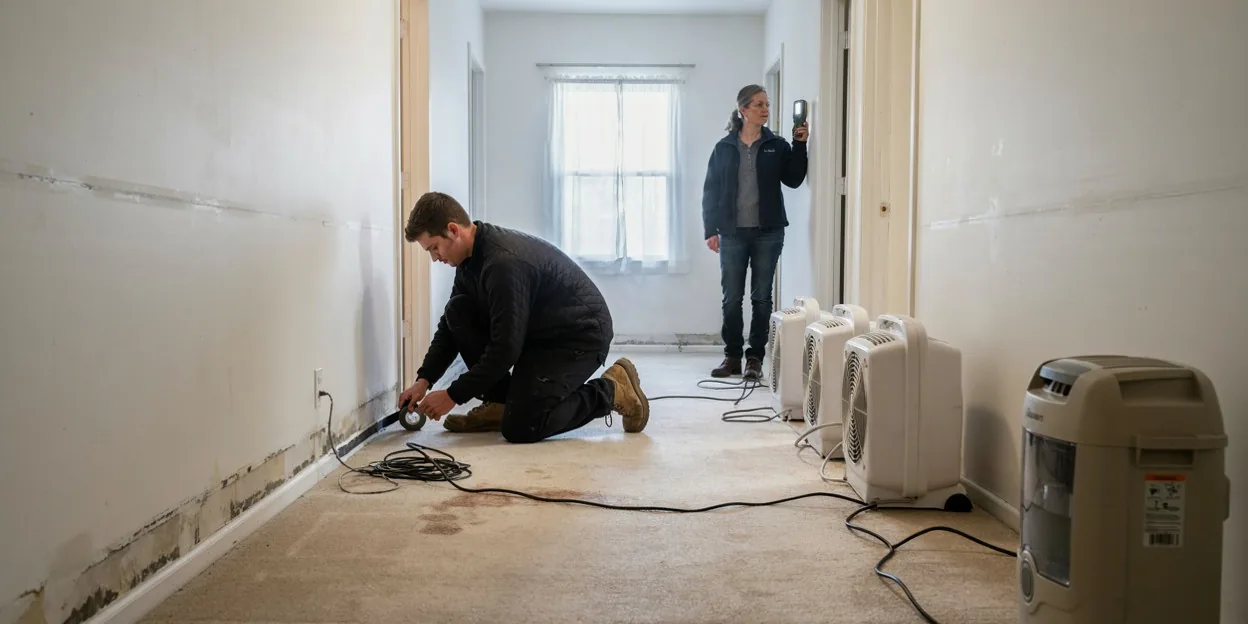
A frozen line does not leak until it thaws, so the crew's first question is when the water was found and when the temperature came up, because the gap between those two tells them how long the wall has been soaking. They confirm the main is off, pump out any standing water, and meter the wall on both sides of the split, the floor under it, and the ceiling of the room below. Then they open the wall where the readings say, not where the drip appeared, because water inside a wall runs along the plate before it finds a way out.
In Blaine the cold spots are the rim joist above the block wall, the garage wall carrying a hose bib line, the exterior wall behind a kitchen sink, and the corner of an unfinished basement where the heat never reaches.
Close the main, turn up the furnace, leave the torch alone
Close the main shutoff by the meter and keep it closed until a plumber has found every split, because a second frozen section can let go as the house warms. Turn the heat up and open the cabinet doors on exterior walls so warm air reaches the pipes. Never use a torch or a heat gun on a pipe inside a wall. Move what you can away from the wet wall, photograph the wall, the floor, and the ceiling below, and make the call. The plumber fixes the pipe; the cleanup crew dries the house.
What the wall gives up after a freeze
Insulation in the wet section comes out, because it held the water against the studs the entire time, and the drywall in front of it comes with it. Studs and the sill dry in place if the crew reaches them inside a few days. Cabinets get metered underneath; a base cabinet that sat in water for a day often stays if the toe kick comes off and air gets under it. Carpet in the room below dries once the pad is gone. Once the water is pumped off a garage slab, the concrete takes care of itself. Then structural drying runs until the cavity reads dry.
Water that ran from a split upstairs down into a finished basement turns one job into two. The basement gets the same treatment as a basement flooding cleanup, with the pad out and every wall metered. A ceiling that sagged under the split is part of the same scope.
Where Blaine houses freeze first
Footings here go about four feet down to get below the frost, but supply lines do not always follow the footing. The ramblers built south of 99th Avenue in the 1960s run copper through the rim joist and out to a hose bib on the garage wall. The two-stories in The Lakes and Club West put a bathroom over the garage or a kitchen sink on a north wall, and a cabinet door that stays shut keeps the warm air out. When the temperature holds below zero for a week, as it did at the end of January 2019 when the airport dropped below minus 25 two nights running, those runs freeze first.
Empty houses are the classic case. A thermostat set to 55 keeps the living room fine and freezes the line in the garage wall. If you travel in January, shut the main and open a faucet, or have a neighbor walk the house every couple of days. A frozen discharge line on the sump pump is the other winter failure, and that one is a sump pump failure cleanup.
Homeowner policies commonly treat a split supply line as a sudden loss. Some policies handle a freeze in an unheated or empty house differently and expect the heat to have been left on. This site cannot say what yours does. Have the crew log the discovery date, the first readings, and the photos so the timeline reaches your adjuster on paper.
Call about a pipe that froze and split
Say which wall the water came from, whether the main is off, and whether a plumber is on the way. Say if nobody was home when it froze and for how many days, and whether a finished basement caught the water. Call (763) 297-2728.